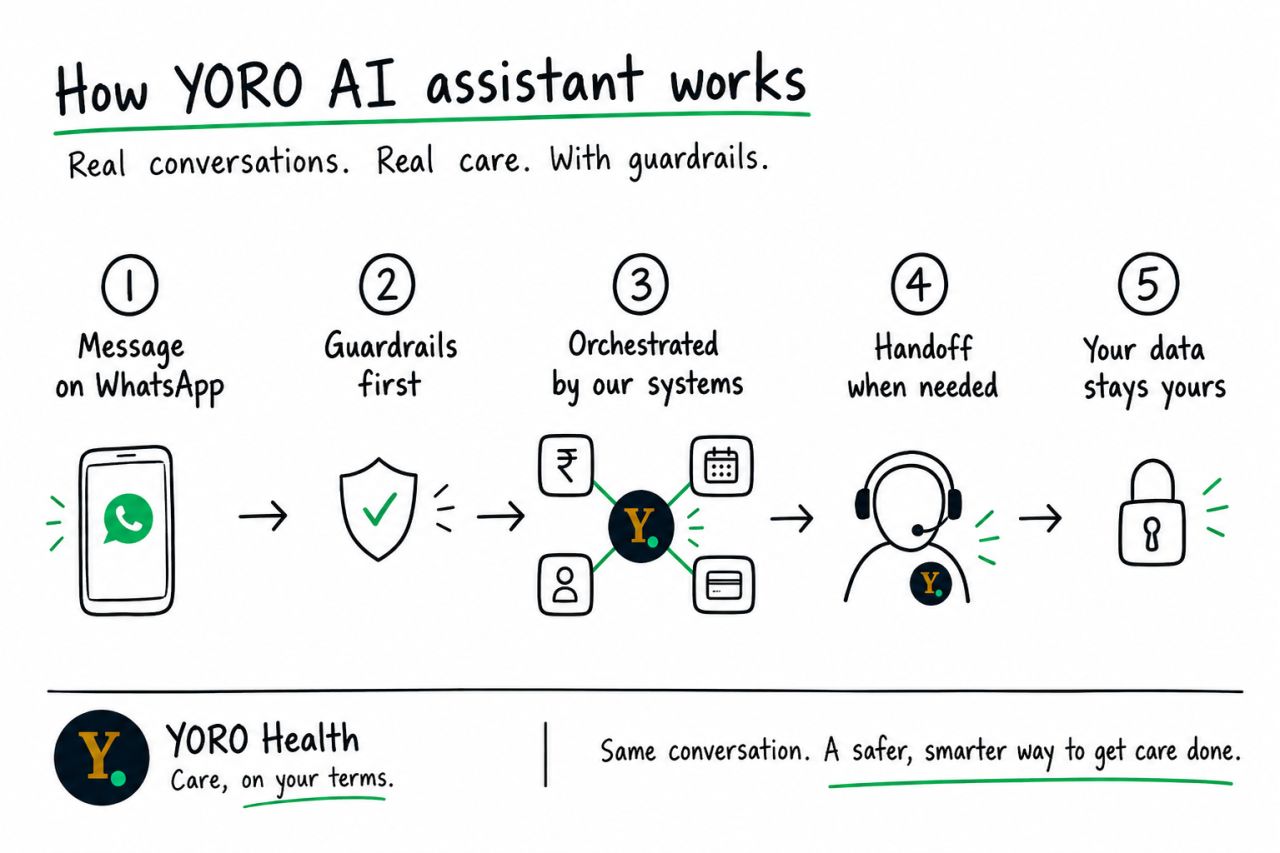
How the YORO AI assistant works
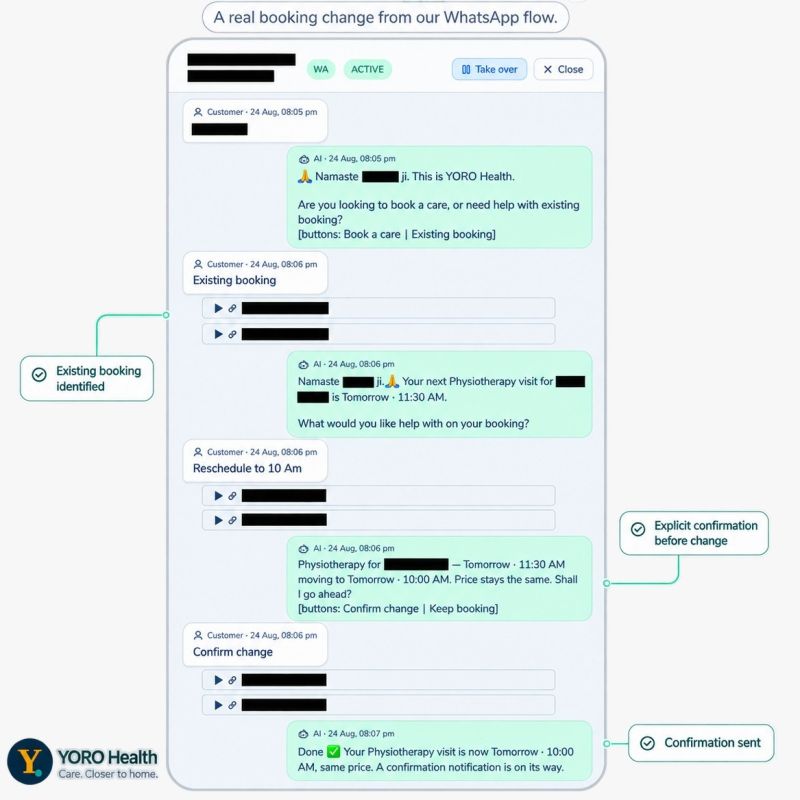
A booking change in the WhatsApp flow
A field note from building YORO Health.
A seventy-year-old in Pune shouldn’t need to learn a new app just to arrange a nurse or a physiotherapy visit.
That’s a product problem before it’s a technology problem.
For many families, messaging is already how everyday life gets organized. They write in Hindi, Marathi, English, or some combination of all three. They ask a question, change their mind, send a voice note, or come back to a conversation hours later.
So at YORO Health, we’ve been working to make conversation a useful doorway into care, not just another chatbot answering FAQs.
The deceptively hard part is what happens after someone sends a message.
An assistant has to work with real availability and real prices, rather than compose a plausible-sounding answer. A booking change should reflect what a customer actually agreed to, not what the model inferred. When a requested time isn’t possible, the experience should help someone understand the next available option. And when a conversation becomes urgent, sensitive, or complicated, a person needs to be able to step in with context.
These aren’t glamorous features. They’re the difference between a conversation that sounds intelligent and a service that people can depend on.
I think about this as a systems problem disguised as a chat interface. The visible experience is a few messages. Behind it sit product decisions about permissions, confirmation, continuity, failure handling, and human accountability.
The family shouldn’t have to care about that complexity. They should be able to ask for help in their own words and know what will happen next.
This is an important lesson from building in healthcare: AI can make the interface feel simpler, but the service behind it has to become more disciplined, not less.